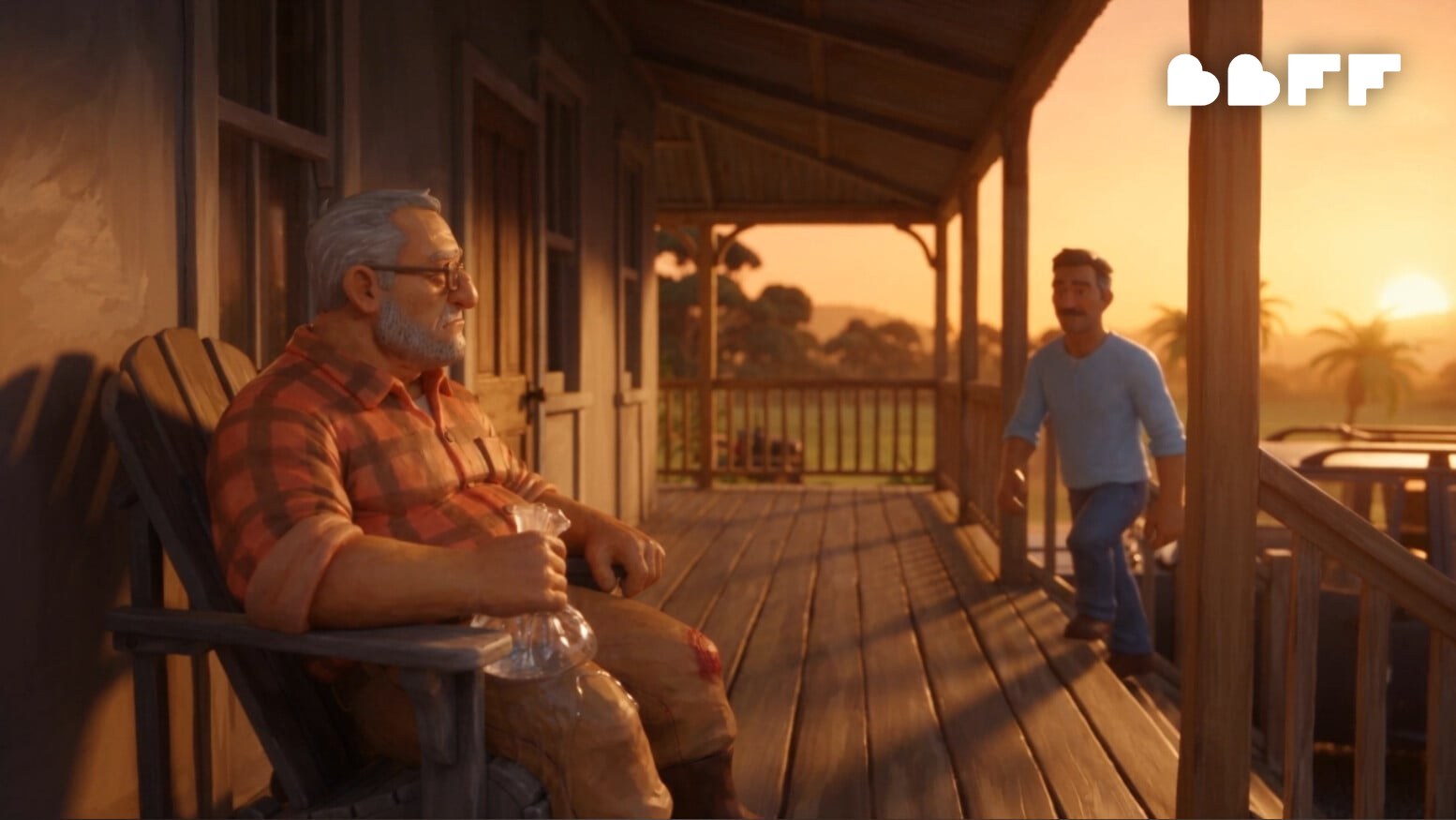
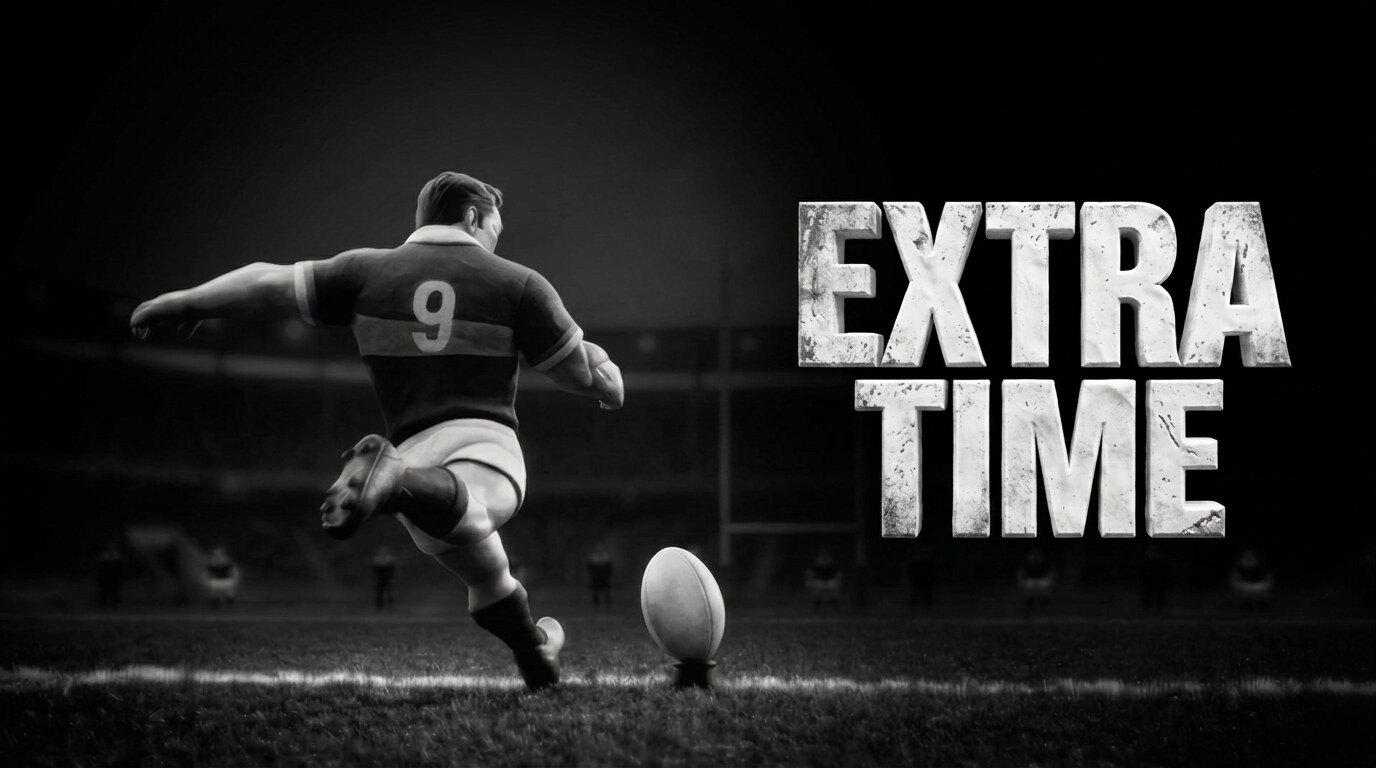
Extra Time is Nick George’s first AI-animated short film: a seven-minute claymation story about a farmer, his son and a lot of silence. Made for the Higgsfield Global Film Festival and screened at Byron Bay International Film Festival 2026.
Nick wrote, storyboarded, directed and edited it solo — every visual generated with AI under his direction. His notes on how it was made are below.
Director’s notes
How I made Extra Time
A seven-minute claymation short about a farmer, his son and a lot of silence. Made solo with AI. — Nick George
Why I made it
Sink or swim
My media feed was full of AI, and honestly it frightened me. As a designer and animator I also knew I faced extinction if I didn’t adapt. I was conflicted, and in some ways I still am, so I decided to lean in and find out what I could do with it.
What I found surprised me. There was incredible creative freedom in it, and I truly enjoyed the process.
The chance came through the Higgsfield Global Film Festival, which gave unlimited video generations for a six-week window. The rules set the frame: everything had to be AI generated, from the visuals to the music, made inside Higgsfield with models like Nano Banana, Seedance and Kling — and no children on screen. I played within those boundaries.
What I really wanted to explore was masculinity: how fathers and sons, especially later in life, struggle to connect emotionally, and how football is often, rightly or wrongly, the way men connect.
Where it began
Poppa
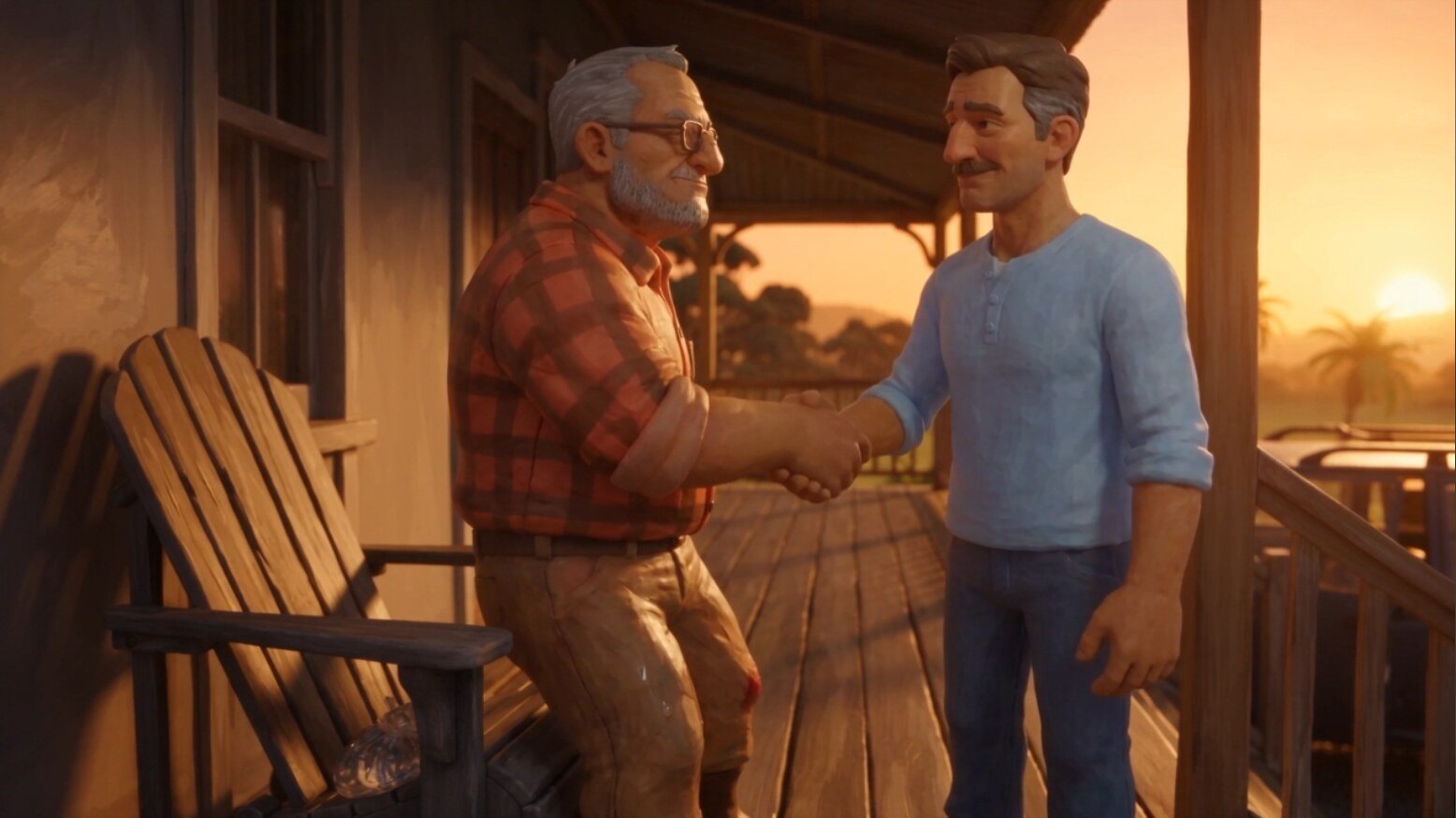
Nana and Poppa lived in the Noosa hinterland and both reached their 90s. After Nana passed, I’d go up to watch the State of Origin with Poppa. The football was an excuse to sit beside him and ask questions. He was a solemn man of few words, but there was beauty in simply sharing those moments.
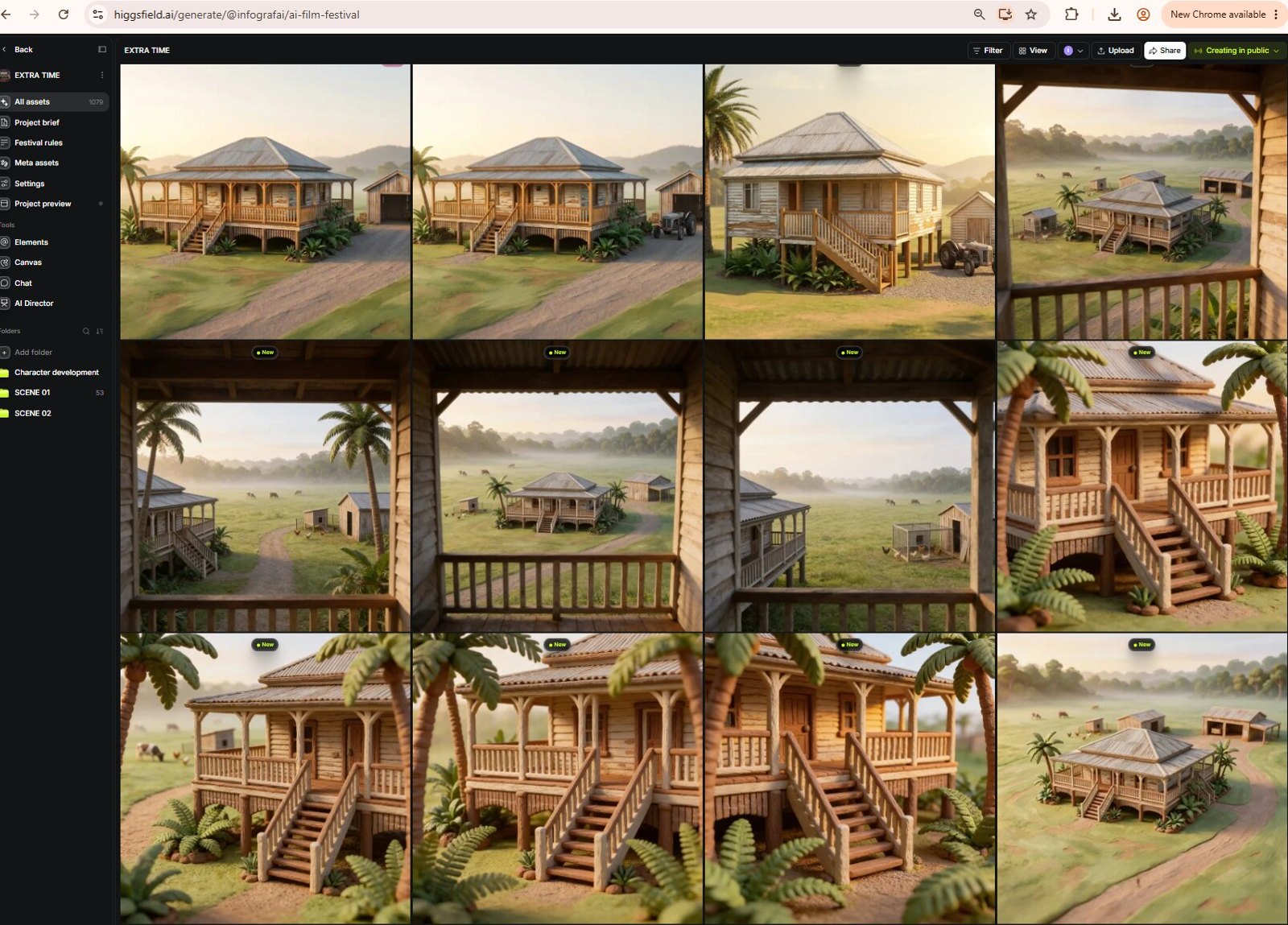
I set the film closer to home, in the Northern Rivers, where agriculture meets jungle — a juxtaposition that’s interesting both visually and practically.
Writing it
A man like Poppa, in his final days
Living alone in an old house, isolated and grieving. Rugby became the thread through it: his walls covered in photos of his playing days, all of that behind him now.
I worked through the structure with Claude, scene by scene, changing it when I didn’t like where it was heading. Then I did what I always do: rough storyboards, then style frames — taking my sketches and notes into Higgsfield, mostly Nano Banana, to generate the frames and then the character sheets.
Silence on purpose
Emotion in silence
It’s the way men often live, and I’m not judging that, just exploring what exists in that space. A silent film with minimal dialogue let me tell the story through small things, which suited the man I was writing about.
I left the rugby open on purpose. No team, no nation, no league or union — a common experience of growing up around football in Australian father-and-son relationships.
The magpie
Almost a conscience on his shoulder
The magpie began as setting — Nana and Poppa had magpies come under their porch like part of the family. In the edit it grew into a recurring thread and a quiet embodiment of Nana. The first magpie had the wrong eyes; I changed them to the amber brown real magpies have, which ties it back to the woman at the end of the film.
Look
Why clay, and why paint
AI produces a lot of generic work, and I wanted to avoid that. I pushed for the gritty, textured end of claymation — never cutesy — and added brushstroke backgrounds, forced through some frames, to balance clay heroes against painted worlds where the colours bleed together.
Characters
Finding the characters
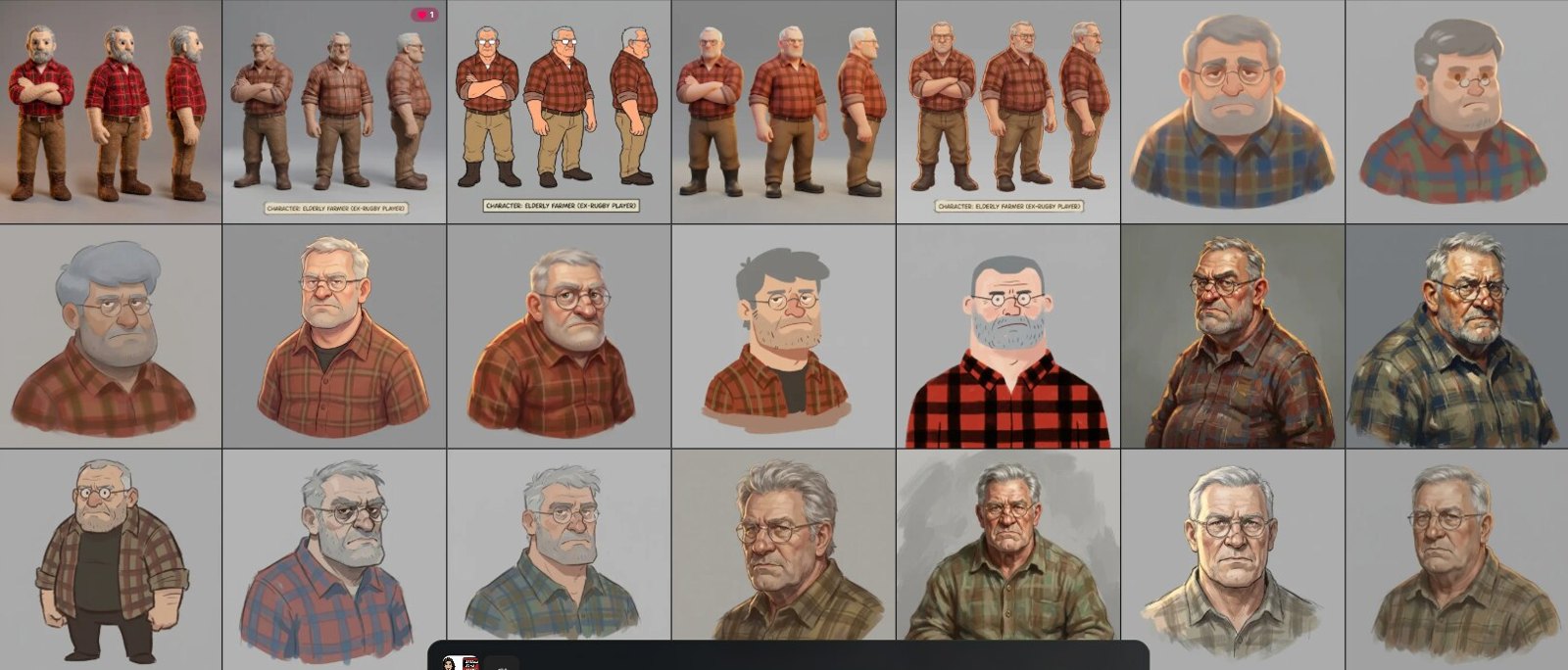
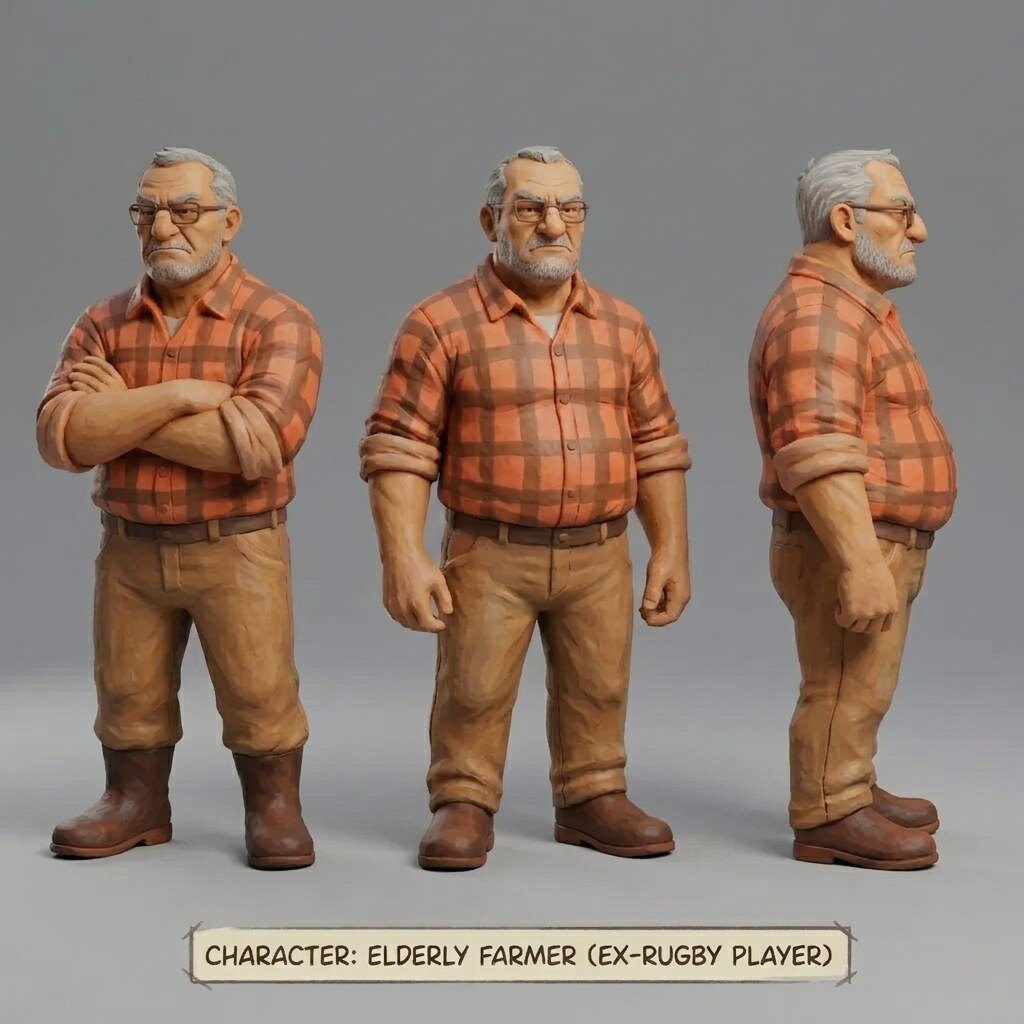
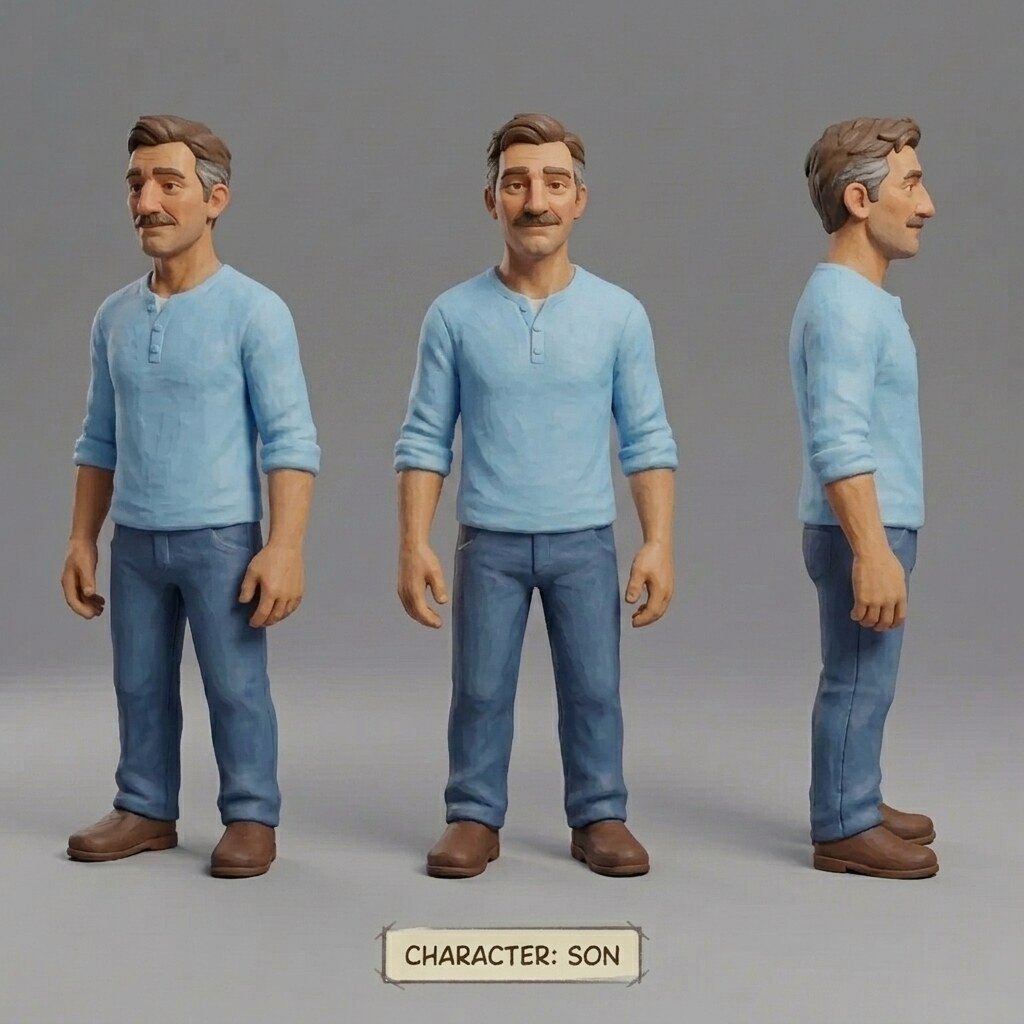
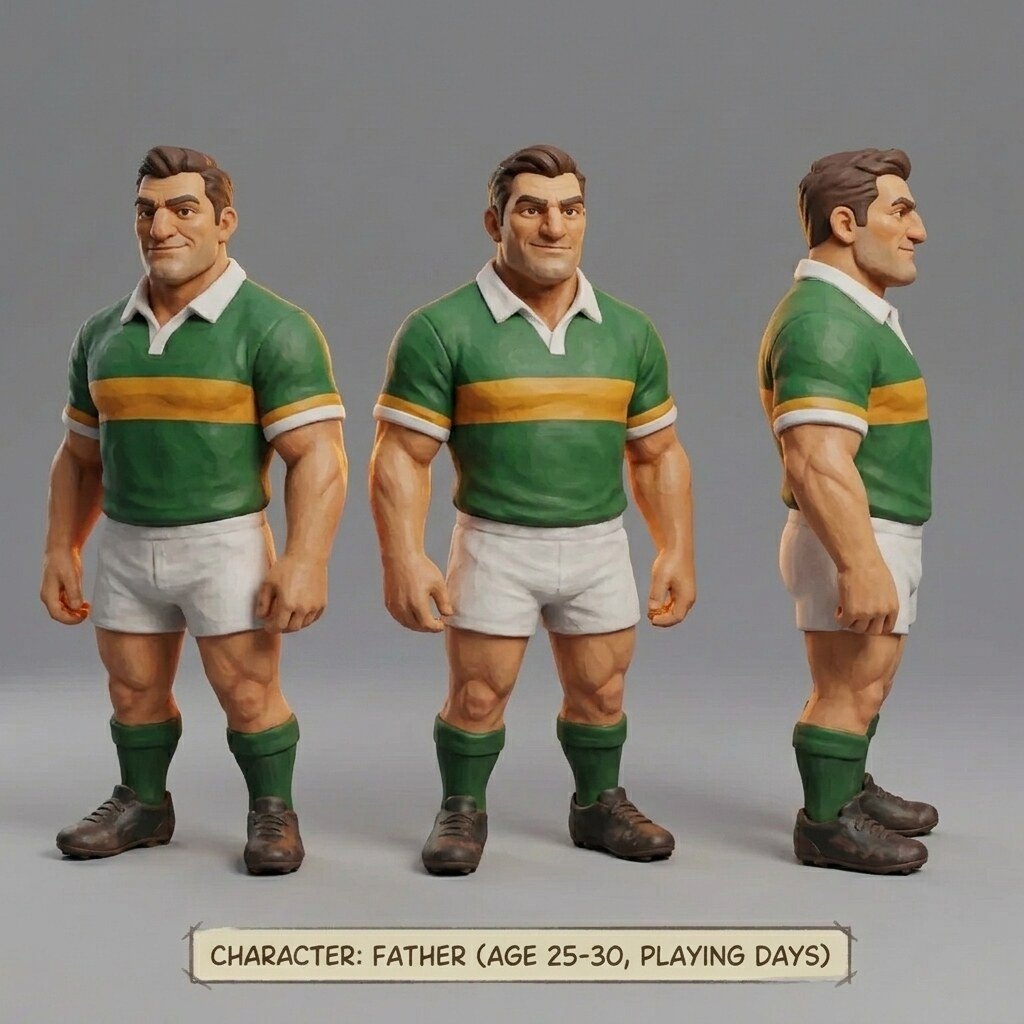
Character design took a huge number of passes. Once a design was locked, each character got a full turnaround sheet so they’d stay consistent in every shot.
World
Locking the world
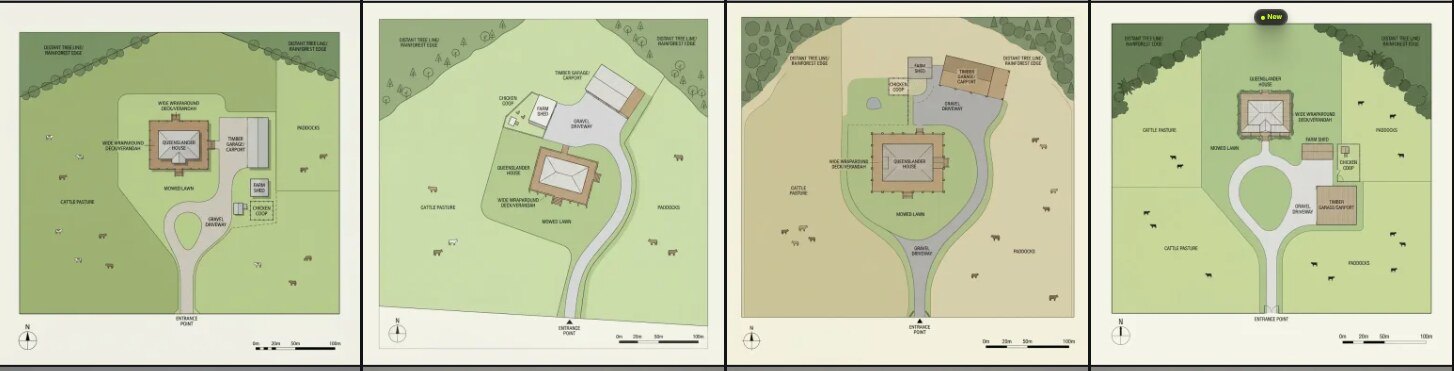
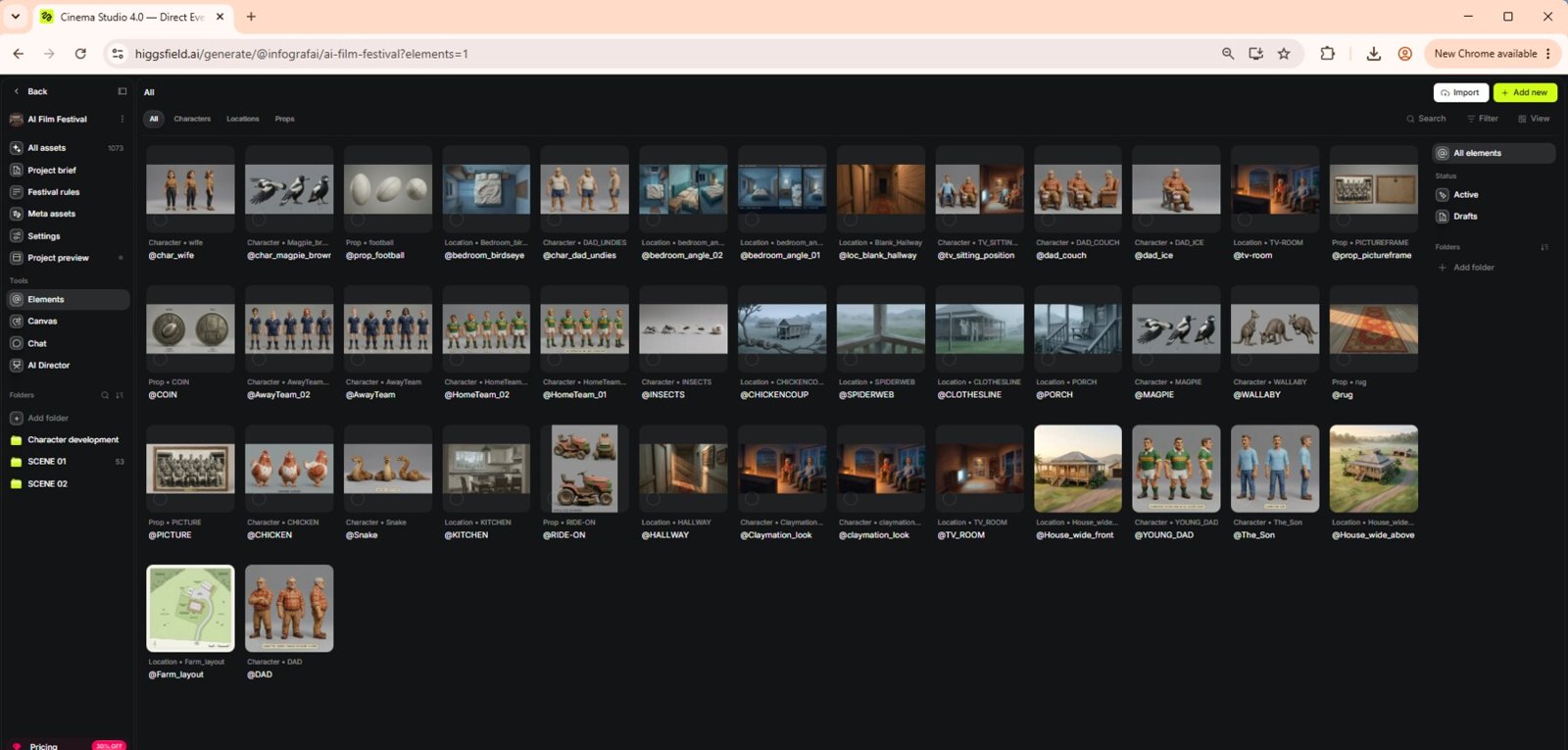
The house and land come back in almost every scene, so the layout had to be right and then locked. By the end the film had around 50 locked elements — characters, rooms, props and teams — called by tag in every prompt, so any shot could pull in the right DAD, the right porch or the right football.
Storyboards
Storyboards inside the rules
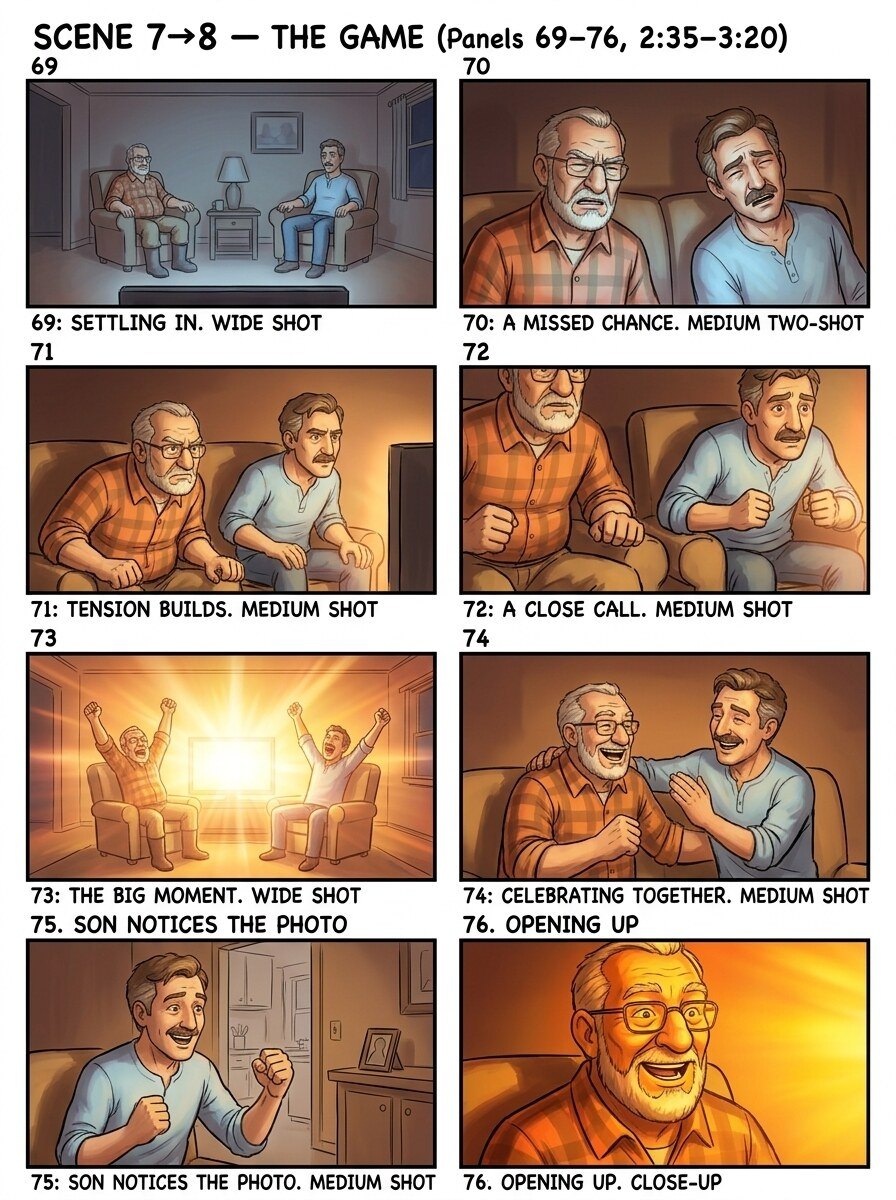
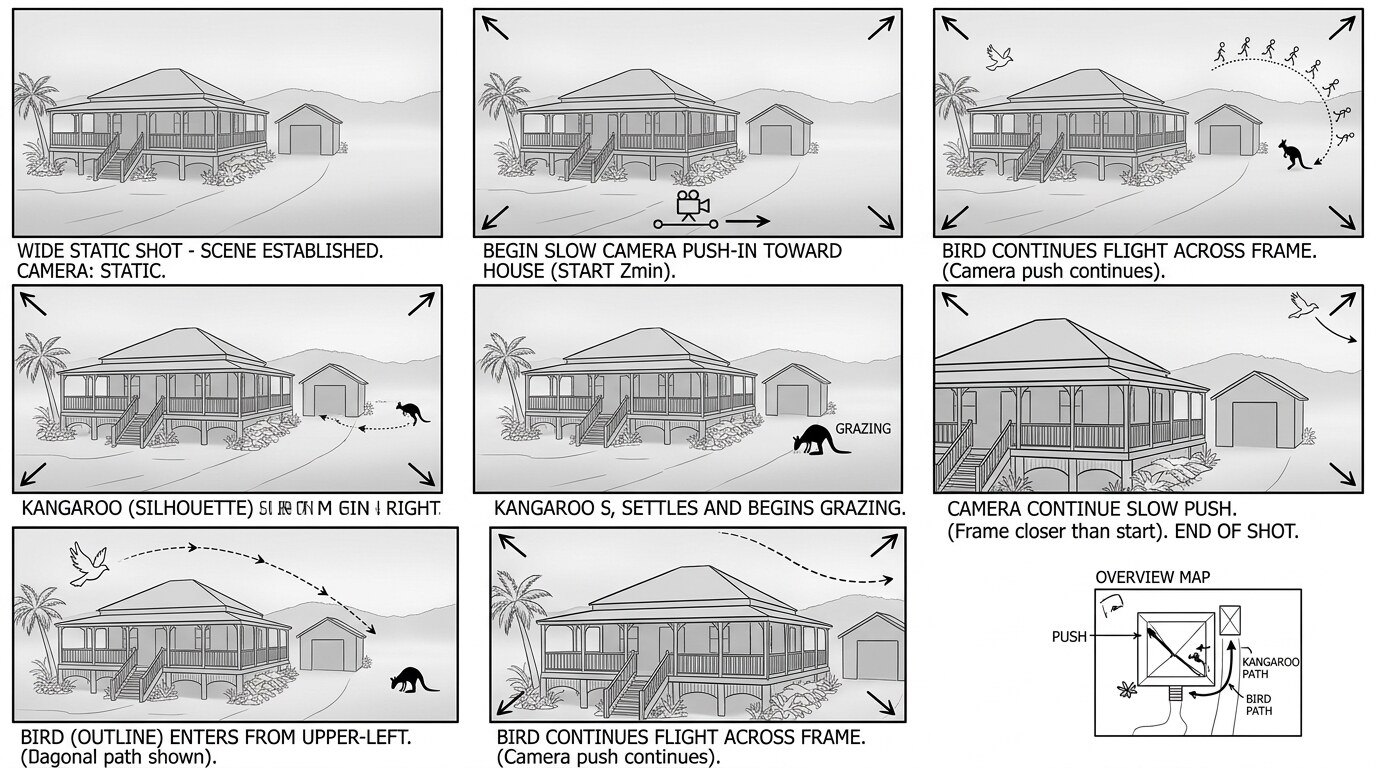
I’d normally sketch these by hand, but the festival required every visual to be generated inside Higgsfield, so I kept to that even for planning — directing Claude and Nano Banana until each panel matched what was in my head.
Production
Stills first, then video
Weeks one to three: the whole film in stills, with multiple options for every shot and a folder of selects. Weeks four to six: video generation and editing, one shot at a time — often going back to rework shots when the animation didn’t do what I needed.
It felt like planning and shooting a real shoot. Sometimes it works first take and sometimes it doesn’t, and you find new things in the edit.
Problem solving
When one shot takes twenty attempts
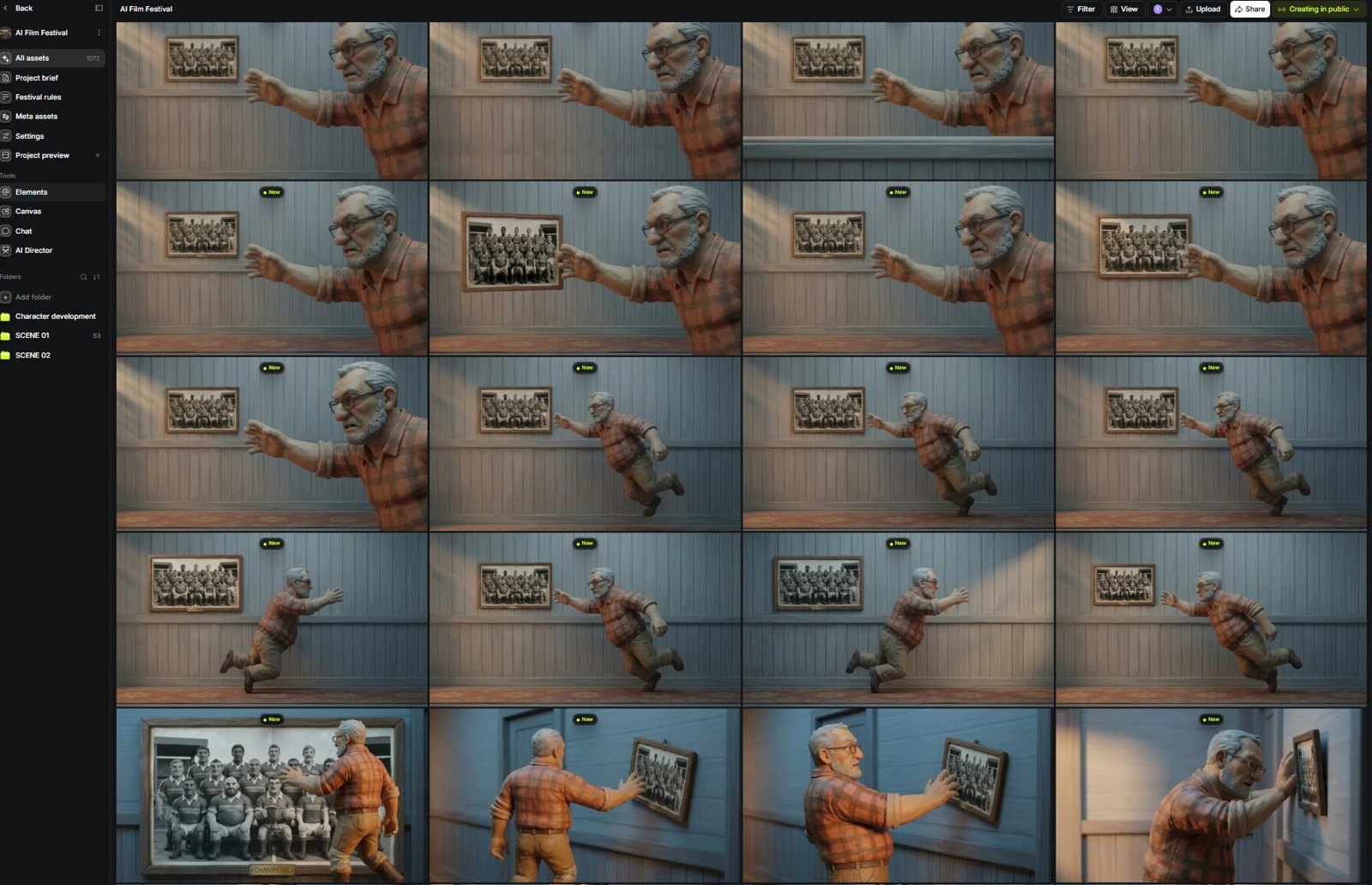
The corridor was the hardest. When DAD falls and knocks the picture frame off the wall, the AI simply wouldn’t do it — so I told it in pieces, the knee bending, the arm, different parts of the body, and let the edit carry the story. A few fixes I made in After Effects, like a chicken generated without legs.
Edit & sound
Room to breathe
I cut the whole film in After Effects. AI work often leaves no room to breathe, so I spent real time finding moments of breath — that, and the emotional beats, are what I’m proudest of. The edit also changed the story: the magpie scenes and the memory of Nana came in there.
I cut most of the generated soundscapes and built a sound effects bed in post. The music came from ElevenLabs: a rugby-anthem feel for the memories and the chase, then piano and gentle lifts for the quieter scenes.
On making with AI
Don’t make AI slop
I think of it as a tool, and like any tool it comes down to intention. Be transparent: this is an AI film, all the visuals were generated with AI, and I’m not trying to hide that. Push the tool to its edge, try to break it, and look for something new. If you’re telling a story, make it heartfelt and authentic.
Working solo is nothing new for me — I’ve spent 10 to 15 years designing, storyboarding and animating small projects myself. Here, nothing gets lost between my head and the screen.
Made for the Higgsfield Global Film Festival. Screened at Byron Bay International Film Festival, 16–25 October 2026. Dedicated to my Nana and Poppa.
Creative direction by Nick George